Water Leak Detection in Farmers Branch
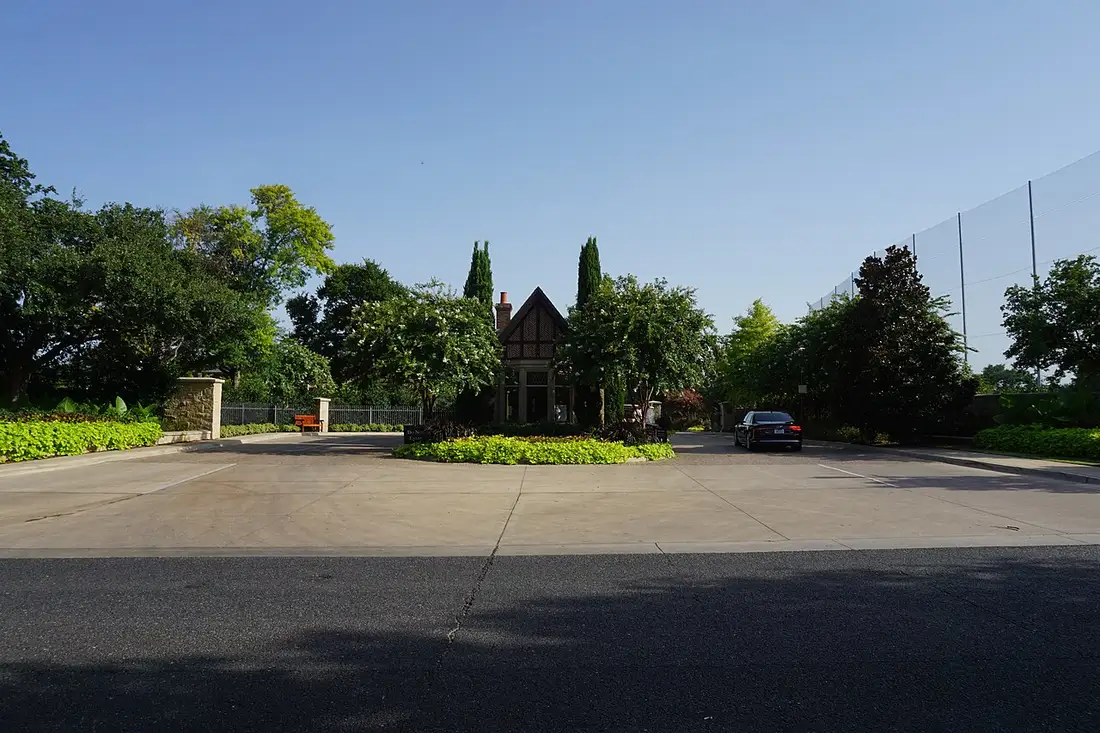
A small, established suburb of 1950s-70s homes - postwar systems at full age, kept with unusual civic pride.
Non-invasive leak detection for Dallas homes - meter isolation, acoustic listening and thermal imaging that locate hidden leaks before they bill you twice.
The third constant is the sky's mood swings. North Texas summers push attic temperatures to extremes that age everything stored there - including the water heaters Texas builders insist on installing in them - while winters are mild until they are not: the February 2021 Winter Storm Uri froze and burst pipes across the metroplex, and every hard front since has replayed the lesson at smaller scale. Dallas plumbing is designed, repaired and winterized against that swing: pipes in exterior walls and crawl spaces are liabilities one week a decade, and certainties on a long enough calendar.
The fourth constant is the canopy. Dallas loves its trees - live oaks, pecans, hackberries, elms - and the trees love the moisture that seeps from sewer lateral joints. Root intrusion is the default diagnosis for a returning lateral clog in any neighborhood old enough to have both clay laterals and mature trees. Between the soil below, the water within, the sky above and the roots alongside, Dallas plumbing lives in a four-front negotiation - and the homes that fare best are the ones whose owners know all four fronts by name.
The master symptom. A spinning low-flow indicator in a silent, dry house means pressurized water is escaping - the only questions are where and how fast.
Leaks bill by the month before they stain anything. A two-month unexplained climb is detection's least costly trigger - the leak is young and the damage has not started.
Pressurized leaks are audible in a quiet house, especially at night. Sound localizes loosely - the instruments refine it - but a new water sound in a wall is never nothing.
Hot-water leaks warm their surroundings; a thermal camera reads the plume through flooring. A mysteriously warm tile patch is a hot line announcing its location.
Ceiling stains under bathrooms or attic heaters, baseboards softening, musty odor in one room - moisture that has a source, and the source is upstream of the stain, not always directly above it.
A supply or irrigation leak in the yard shows as a wet patch in a dry week or grass greener over the line's path - the ground itself is the moisture meter.
Dallas homes hide leaks in a characteristic set of places, and the housing stock explains each. Under slabs: the postwar-to-1990s copper runs flexed by clay until a pinhole opens - the city's signature hidden leak. In walls: supply lines to showers and tubs, where a slow fitting drip can soak framing for months behind tile. In attics: water heaters and their pans, whose failures announce through ceilings. In yards: the main line from meter to house and irrigation branches, leaking into soil that hides the evidence until the bill or a wet patch testifies. Each hiding place has a detection method matched to it, which is why detection is a system, not a single gadget.
The instruments work because water escaping under pressure behaves distinctively. It makes sound - a hiss whose intensity peaks over the leak - that acoustic sensors and listening discs pick up through slab and soil. Hot water changes temperature, and thermal imaging draws its plume. Moisture changes materials, and pin and pinless meters map the wet territory inside walls and floors. Pressure testing isolates sections: close the system, watch the gauge, and the section that falls is the section that leaks. The professional sequence runs from the whole (meter) to the part (valves) to the point (instruments), so that by the time anything is opened, it is opened once, in the right place.
What detection deliberately is not: demolition by intuition. The old method - opening walls and floors where the damage showed - confused the leak's exit with its source, because water travels along joists, pipes and slab edges before it surfaces. In Dallas slab homes the confusion is worse: a leak can surface rooms away from its origin. The evidence-first sequence exists to protect the house from the search itself. A proper detection visit ends with a located leak, a marked spot, and a repair scope - and, when the evidence is honestly ambiguous, it says so and explains the next test rather than opening a floor on a hunch.
Spring is Dallas plumbing's audit season. The winter's freeze stress - if the year had one - finishes announcing itself as the ground warms, and the spring rains saturate the clay, which swells and works on under-slab lines and laterals: slab leaks and slow laterals cluster in the wet weeks. It is the season to run the meter test, walk the yard for wet spots, camera any lateral that misbehaved in winter, and service the water heater before summer demand. Spring also opens the remodel calendar - the open-wall verdicts taken now are the least costly of the year.
Summer moves the stress indoors and up. Attics become ovens that age the water heaters sitting in them, irrigation systems run daily and hide yard leaks behind legitimate usage, and the clay - drying now - shrinks away from foundations and stresses the lines the wet spring swelled around. Slab leaks seeded by the moisture swing surface as bills spike alongside watering. Summer discipline: know your irrigation's normal consumption so a leak cannot hide inside it, keep the attic heater's pan drain clear, and treat a mid-summer bill anomaly as a leak until the meter test acquits it.
Fall is the preparation season, and Dallas homeowners who lived through February 2021 keep it faithfully. Insulate the exposed runs while the weather is kind, disconnect hoses before the first front rather than after, service the heater, descale the tankless, and rehearse the shutoff. The clay begins its wet-season swell as rains return, so fall is also when lateral roots - grown fat all summer - start closing lines: a pre-holiday camera or cleaning for a root-history lateral is the least costly insurance against a Thanksgiving backup.
Detection has a quiet economic superpower: it converts uncertainty into scope. Before detection, a hidden leak is an open-ended fear - it could be anywhere, cost anything, have damaged everything. After it, the leak is a point on a floor with a repair menu attached. That conversion is what lets homeowners make calm decisions, get comparable quotes, and talk to insurers in facts. It is also why detection should precede repair bidding: quotes against an unlocated leak are guesses priced for the quoter's protection, while quotes against a located one compete on the actual work.
The instruments deserve a demystifying word. Acoustic sensors do not 'see' leaks - they hear the hiss of pressurized escape and triangulate its loudest point. Thermal cameras do not find cold-side leaks at all - they read heat, which is why they serve hot lines and radiant evidence. Moisture meters measure materials, not water in pipes. The craft is in the combination and the sequence: each instrument covers the others' blindness, and the isolation testing disciplines them all. When a detection report explains which methods converged on the mark, it is showing its work - and that transparency is what a homeowner is actually buying.
Choose detection whenever water is suspected but not seen - the meter's testimony outranks hope. The discipline's promise is modest and total: you will know where the water is going, proven by instruments, before a single surface is opened in anger. In a slab city on moving clay, that promise is the difference between a repair and an excavation.
Dallas plumbing starts with the ground itself. The city sits on the Blackland Prairie, whose expansive clay - the Houston Black soil series - swells when it takes on water and shrinks and cracks as it dries. That seasonal breathing moves everything buried in it or resting on it: slab foundations flex by fractions, under-slab water lines stress at the same points year after year, and sewer laterals open at their joints a hair at a time. A large share of Dallas plumbing work - slab leaks, lateral root intrusions, drains that lose their slope - is this single geological fact expressing itself through different pipes. Any diagnosis that ignores the soil is guessing.
The water itself is the second constant. Dallas drinks from reservoirs - Lake Ray Hubbard, Lewisville Lake, Grapevine Lake, Lake Tawakoni, Lake Fork and Lake Palestine among them - and the treated supply arrives moderately hard. Hardness is a maintenance schedule written into the water: it precipitates as scale inside water heaters, crusts aerators and showerheads, stiffens faucet cartridges, and demands yearly descaling from tankless units. It is not a safety issue; it is the reason Dallas plumbing maintenance has a rhythm that soft-water cities never learn.
All fixtures off, the meter watched. If it moves, the hunt is real and the rate of movement sizes the leak. If it does not move, the problem is elsewhere - a drain, a fixture's intermittent use, or no leak at all.
Valves close in sequence - the water heater, the house zones, the irrigation, the yard line - and the meter is watched after each. The closure that stops the meter names the territory: hot or cold, house or yard, this loop or that one.
Within the territory, acoustic listening and thermal imaging converge on the point. Wall and floor moisture readings confirm the map. The leak gets a mark, not a shrug.
With the location known, the repair is scoped precisely - what must be opened, what route options exist (spot repair, reroute), and what verification will follow. Detection's product is a decision, delivered with evidence.
Prevention here means detection moved earlier: the tests and alarms that find water while it is still a plumbing problem instead of a construction problem.
The communities around Dallas share its clay soil, its water and its freeze risk - with their own twists of housing era, slab construction and pier-and-beam stock.
A small, established suburb of 1950s-70s homes - postwar systems at full age, kept with unusual civic pride.
A small town of townhomes, condos and restaurant rows - shared systems and commercial loads in a few square miles.
1980s-2000s master-planned suburbia: big family homes whose first-generation systems are reaching decision age.
Lake city with a 1960s old town, 80s-90s subdivisions, and lake-side homes - three plumbing eras by neighborhood.
In the historic core, the Park Cities and the east side - Downtown Dallas, Uptown, Highland Park, University Park, Lakewood and Oak Lawn, Bishop Arts, Deep Ellum, North Dallas, East Dallas - the pipe stock runs from Dallas's oldest cast iron and clay to the boom-decade copper of the postwar subdivisions, and water leak detection follows that record: century-old systems in the core, mid-life stock in the subdivisions, and shifting clay working on all of it at the same rate.
Across the north and west growth sides - Oak Cliff, South Dallas, Richardson, Garland, Mesquite, Irving and Grand Prairie, Plano, Frisco, McKinney, Allen, Carrollton - sit the slab subdivisions of the 1970s onward, the growth-edge suburbs and the second-generation systems now reaching their first renewals, which together make this the steadiest water leak detection territory in the metro.
Beyond the city line, the same work runs in Farmers Branch, Addison, Coppell, Lewisville, Rowlett, Rockwall, DeSoto, Duncanville, Cedar Hill, Lancaster, Balch Springs - fast-growing suburbs and older inner-ring communities where slab stock, mature trees and small-city pipe add their own chapters. Every one of these area pages carries the local detail for water leak detection in that community.
Every area we serve has its own Water Leak Detection page with local detail.
Water Leak Detection runs across the whole service map: Downtown Dallas, Uptown and Deep Ellum; Highland Park, University Park and Oak Lawn; Lakewood, East Dallas and Bishop Arts; North Dallas, Oak Cliff and South Dallas; and beyond the city in Richardson, Garland, Mesquite, Irving, Grand Prairie, Plano, Frisco, McKinney, Allen, Carrollton, Farmers Branch, Addison, Coppell, Lewisville, Rowlett, Rockwall, DeSoto, Duncanville, Cedar Hill, Lancaster and Balch Springs. One call covers all of it - the local pages above carry the detail for each. If your street is not named here, call anyway: routes grow with demand, and most Dallas County addresses are already within reach of a scheduled run.
Plumbing prices are built from factors, not pulled from a chart: what failed, where it sits (slab, wall, attic, yard), how much must be opened to reach it, the materials involved, and what the opened work reveals. Access is the silent multiplier in Dallas: the same repair costs very differently through a crawl space than through a slab and a tile floor. Detection and camera work exist to shrink that unknown before the quote.
Read the GuideDallas's treated reservoir water is moderately hard - typically in the 3.5 to 7 grains-per-gallon band - and that is enough to scale water heaters, crust fixtures and shorten appliance lives on a predictable schedule. A softener fixes hardness (scale, spots, soap performance); carbon filtration fixes taste and chlorine. They are different tools for different complaints, and an inexpensive home test tells you which you have.
Read the GuideDecide by the vessel, not the part: a failed element or valve on a young tank is a repair; the same failure on a ten-plus-year tank with rust or rumble is money lent to a vessel that is leaving. In Dallas water, tank life runs eight to twelve years, with yearly flushing and anode care earning the long end. An attic location raises the stakes - a neglected attic tank is a ceiling claim waiting for its date.
Read the GuideDetection is priced as a service; the alternative is water damage plus exploratory opening plus the same repair. Against a leak running hundreds of gallons a day into a slab and a floor, early detection is the least costly line item in the story - the meter test that triggers it is free.
Yes - irrigation is isolated at its own valve and tested as its own territory. Yard leaks show at the meter with the house isolated, and surface evidence (wet patches, green stripes) guides the instruments to the zone.
Drain leaks do not move the meter - they are found by their moisture, odor and staining patterns, and confirmed by camera and isolation testing of the drain lines. The detection approach differs, but the evidence-first sequence is the same.
If the meter moves, call. A pressurized leak does not heal, slow down or stay the same price - it runs, saturates and bills. Watching is only sensible when the evidence is ambiguous and a re-test is scheduled; a confirmed moving meter is a decision already made.
By narrowing before opening: the meter proves the leak, valve isolation names its territory, and acoustic and thermal instruments pinpoint it through the slab or wall. Only then is anything opened - at the located spot, for the repair itself. The method exists precisely to replace exploratory demolition.
Most likely under the slab or in the yard line - the two places pressurized water can escape invisibly in Dallas homes. Isolation separates them: if closing the house valve (leaving the yard line live) stops the meter, the leak is between meter and house; if not, it is in the house's territory, and the slab is the prime suspect.
Yes - moisture mapping shows the wet territory, thermal imaging traces hot-water lines and their plumes, and acoustic sensors hear pressurized escapes through framing. Shower and tub supply fittings are the usual wall-leak culprits, and they are found by evidence, not by opening tile on a guess.
For a pressurized leak in a typical Dallas home, acoustic and thermal methods together usually narrow the location to a small area - often within a foot or so. Accuracy depends on the leak's size, depth and the home's construction, and an honest detection report states the confidence along with the mark.
One call connects you with a plumbing professional serving Dallas and the surrounding communities - diagnosis, repair and a clear scope before work starts.
📞 Call Now