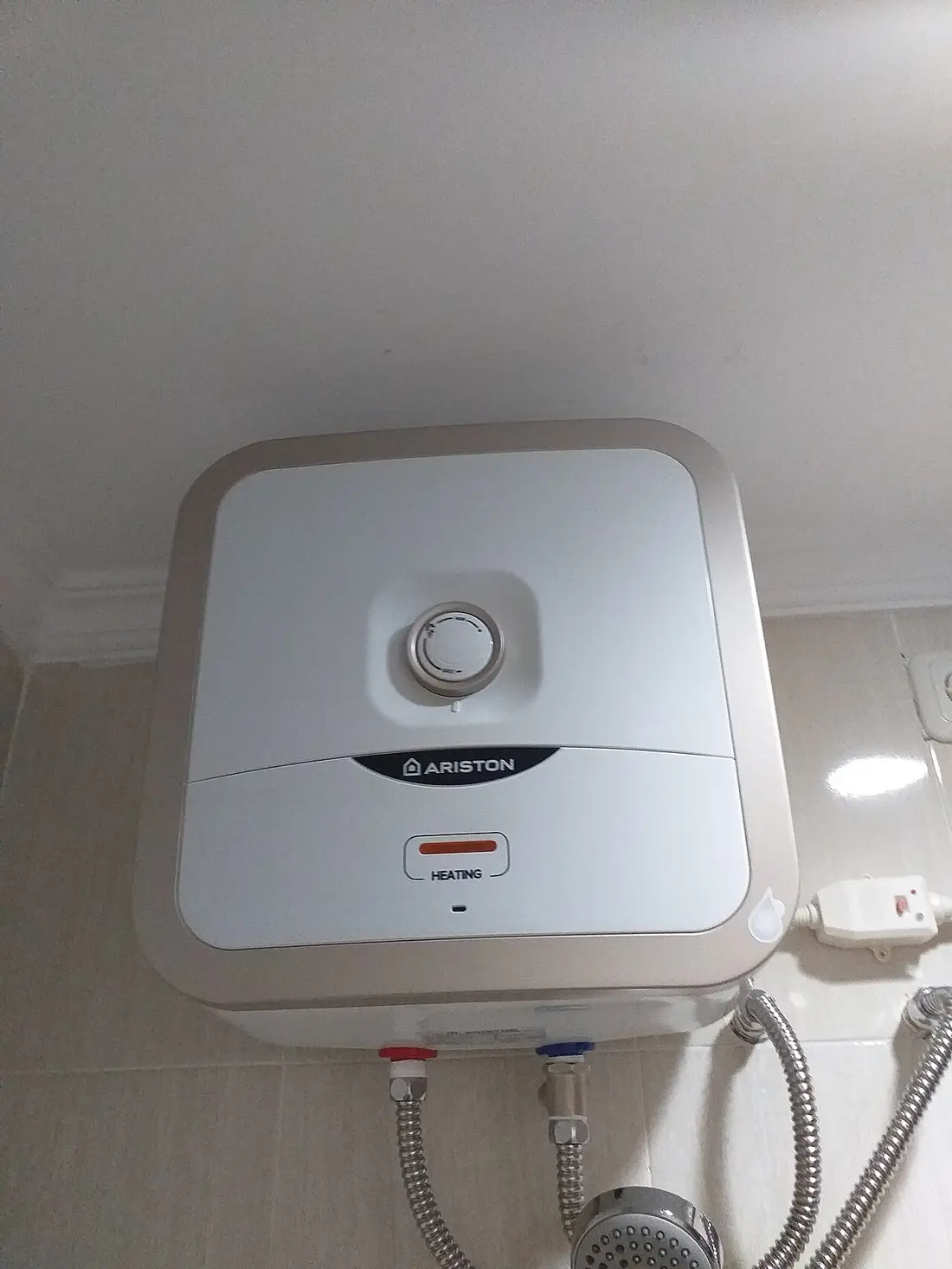
Dallas's treated reservoir water is moderately hard - typically in the 3.5 to 7 grains-per-gallon band - and that is enough to scale water heaters, crust fixtures and shorten appliance lives on a predictable schedule.
Problem: Dallas's treated reservoir water is moderately hard - typically in the 3.5 to 7 grains-per-gallon band - and that is enough to scale water heaters, crust fixtures and shorten appliance lives on a predictable schedule.
Solution: A softener fixes hardness (scale, spots, soap performance); carbon filtration fixes taste and chlorine. They are different tools for different complaints, and an inexpensive home test tells you which you have.
When to call: The least costly defenses are rhythm, not equipment: yearly heater flushing, vinegar descaling of aerators and showerheads, and a descale calendar for tankless units.
Every Dallas homeowner has met their water's mineral content - as the white crust on the showerhead, the spots the dishwasher leaves, the kettle's fur. What fewer know is the number behind it, and the number is what separates a rational response from an expensive one. This guide explains where Dallas water gets its hardness, how the scale of hard-to-soft actually runs, the specific damage hardness does inside a home's systems (heaters first, always), and the honest menu of responses - from vinegar and rhythm to softeners and filtration - matched to the evidence a simple test provides.
The Dallas Angle
The water itself is the second constant. Dallas drinks from reservoirs - Lake Ray Hubbard, Lewisville Lake, Grapevine Lake, Lake Tawakoni, Lake Fork and Lake Palestine among them - and the treated supply arrives moderately hard. Hardness is a maintenance schedule written into the water: it precipitates as scale inside water heaters, crusts aerators and showerheads, stiffens faucet cartridges, and demands yearly descaling from tankless units. It is not a safety issue; it is the reason Dallas plumbing maintenance has a rhythm that soft-water cities never learn.
Where Dallas water gets its character
Dallas drinks from reservoirs - Lake Ray Hubbard, Lewisville, Grapevine, Tawakoni, Fork and Palestine - and the water picks up its mineral content from the region's limestone-influenced geology on its way to the treatment plants. Treatment makes it safe and stable; it does not remove the calcium and magnesium that constitute hardness. The result, by the standard scale, is moderately hard water: enough mineral to matter to appliances and fixtures over months and years, delivered consistently enough that its effects are a schedule rather than a surprise.
Hardness is measured in grains per gallon (gpg) or milligrams per liter. The conventional bands: under 1 gpg is soft, 1 to 3.5 slightly hard, 3.5 to 7 moderately hard, 7 to 10.5 hard, beyond that very hard. Dallas typically tests in the moderate band, with some seasonal and source-blend variation. That middle position is exactly why Dallas arguments about softeners never settle: the water is hard enough to tax every heating appliance and spot every glass, yet soft enough that many households live with it indefinitely. Both experiences are real; the test tells you which house you have.
What hardness actually does inside a house
Hardness precipitates where water is heated or evaporates, which ranks its victims. First, the water heater: every gallon heated leaves mineral behind as sediment on the tank floor, insulating the burner, causing the kettle-rumble, and shrinking capacity year by year - the reason Dallas heaters live eight-to-twelve years instead of longer. Tankless heat exchangers scale faster in their narrow passages, which is why their yearly descale is mandatory in this water. Then the fixtures: aerators crust, showerheads spray sideways, cartridges stiffen and drip as grit scores their seals. Then the surfaces: glassware film, laundry dinginess, soap consumed before it can clean.
It is worth stating what hardness does not do: at Dallas levels it is not a health problem - calcium and magnesium are dietary minerals, and the city's treated water meets safety standards that hardness does not threaten. The case for treatment is economic and experiential - appliance lives, cleaning performance, feel - and it should be argued on those honest grounds. Any sales pitch that reaches for fear on treated municipal water, without a test showing a specific contaminant, has left the evidence behind.
PROBLEM
→
SOLUTION
The responses, matched to the evidence
Start with rhythm, which costs nothing: flush the water heater yearly, soak aerators and showerheads in vinegar on a schedule, wipe shower glass before mineral sets. For many Dallas households, rhythm is the whole answer. Next, point solutions: a carbon filter at the kitchen tap for taste (a chlorine complaint, not a hardness one), a scale-control device on a single line. Then the whole-house answer for hardness itself: an ion-exchange softener, sized to the home's tested hardness and flow, which defends every downstream appliance and restores soap's performance everywhere at once.
The decision procedure matters more than the products: test first (strips or a drop kit give a working number in minutes), name the complaint precisely (scale? spots? taste? all three?), and match the tool to the complaint - softener for hardness, carbon for taste, both if both. Verify after installation with the same test at the same tap. A household that follows that order spends once; a household that buys on a demonstration kit's theater often spends twice and still has spots.
Hardness across the Dallas housing stock
The water is the same across Dallas; the exposure is not. Older homes with galvanized remnants suffer hardness twice - the pipe's own rust plus mineral scale at every restriction. Slab homes with long under-slab runs deliver water that has sat in warm ground, and attic heaters bake sediment faster in summer attic heat. Newer PEX homes resist scale in the pipes themselves but their fixtures, heaters and appliances scale on the same schedule as everyone else's - the mineral does not care what carried the water, only where it was heated or left to evaporate.
That is why two Dallas neighbors can honestly disagree about hard water: the one with a ten-year-old unmaintained attic heater and glass shower doors lives in a different mineral regime than the one with a new heater, a flushing rhythm and frosted glass. Exposure management - maintenance and materials - moves a household's experience as much as treatment does, which is why this guide insists on rhythm before equipment.
Reading your own evidence like a professional
Professionals read scale the way mechanics read tire wear: pattern first. Scale concentrated at the heater and the hottest lines is normal precipitation. Scale appearing suddenly faster than last year suggests a change - a heater running hotter, a softener out of salt, a municipal blend shift. White crust that is actually sandy grit points to sediment, a different problem with a different fix (flushing and possibly the city's main work nearby). And scale only in one bathroom, in an older home, can mark the galvanized remnant feeding it.
Keep a simple log: the date you descaled the showerhead, the heater's flush dates, the softener's salt rhythm. Within a year the log becomes your house's personal hardness report - more actionable than any regional average, and exactly the document a water-treatment professional should ask to see before recommending anything.
Myth vs Fact
The Myth
Bottled-water-style purity is the goal for the whole house. It sounds virtuous, so it sells systems. In reality, different uses want different water: appliances want softness, palates want taste handled, gardens want minerals left alone. Whole-house treatment aimed at a single purity ideal overserves some uses and underserves others.
VS
The Fact
The tap test, repeated seasonally, is the only honest specification. Dallas blends reservoir sources through the year, and hardness moves with the blend. A number from one season is a snapshot; a household that tests twice a year owns its actual water - and can set softener regeneration and descale calendars to reality instead of folklore.
The Related Service, In Depth
There is a hierarchy of water complaints worth respecting: safety, damage, comfort. Dallas's treated municipal water answers the safety tier by regulation and testing - the homeowner's water quality work begins at the damage tier (what hardness does to appliances and fixtures) and the comfort tier (taste, feel, spots). Keeping the tiers separate prevents both complacency and panic: no filter purchase should be sold as a safety necessity on treated city water without a test showing a specific problem, and no hardness evidence should be waved off when the appliances are keeping score. Evidence, tier by tier, is the whole method.
That is the service side of this guide's subject. When you are ready, the Water Quality page carries the process, the coverage by neighborhood and the number to call.
The Process, Step by Step
Test the water first
Hardness strips or a drop titration kit at a cold tap, away from any existing treatment. Write the number down - it, not a sales demonstration, specifies everything that follows.
Map your evidence
For two weeks, note where scale forms fastest, whether glassware films, how the heater sounds, and how soap behaves. The map tells you whether your complaint is scale, taste, or both.
Apply rhythm before equipment
Flush the heater, vinegar-soak the aerators and showerheads, and live with the maintained baseline for a month. For many Dallas households, rhythm is the whole answer.
Quote treatment against your number
If the evidence still argues for equipment, get quotes against your tested hardness and require a post-install test at the same tap as part of the job.
Put it on a calendar
Salt checks, filter changes, descale dates - treatment unmaintained is theater. The calendar is what makes the purchase real.
Prevention Checklist
Yearly water heater flush - the single highest-value hour in a Dallas home's calendar.
Vinegar descaling of aerators and showerheads quarterly keeps flow honest and reveals changes early.
Tankless owners: the yearly descale is the price of the technology in this water. Pay it gladly.
If you soften, keep the brine tank salted and check monthly - an empty softener is a month of untreated water discovered late.
Retest after any change - new treatment, municipal source shifts, a move. The number is the plan.
A Field Checklist for Your Own Home
Get your tap's hardness number with a test kit and write it in the house file.
Flush the water heater and note the date; set the yearly calendar entry.
Vinegar-soak one showerhead and one aerator and compare flow before and after - your personal scale demonstration.
Name your complaints precisely (scale / spots / taste / soap) before shopping for any treatment.
What the Paperwork Should Show
The professional scope for water quality is: test, specify, install, verify. Testing means a measured hardness (and a look at disinfection and sediment) at your tap. Specifying means matching equipment to that number and to your named complaints - softener capacity from hardness and household flow, carbon sized for contact time. Installation includes the bypass, the drain, and settings matched to your household's rhythm.
Verification is the step that separates treatment from theater: the same test, at the same tap, after the system settles - with the result in your house file next to the 'before' number. Any scope missing the verification step is asking to be believed rather than checked, and water is too easy to check for that.
How a Professional Works This Problem
Professionals test before they treat - a titration kit at the tap, not a color-changing demonstration. The reading sets the softener's regeneration, sizes its resin bed to the household's flow, and decides whether carbon belongs in the train. Post-install, the same test at the same tap verifies the promise. The trade's water-quality reputation suffers from its theatrical wing; the antidote is a number, measured twice.
Mistakes That Make It Worse
Buying a softener for a taste complaint (or a filter for a scale complaint) - the two systems solve different problems and neither forgives the confusion.
Skipping the test and sizing by square footage or family size alone, which produces systems that regenerate wastefully or run out of soft water on Saturday morning.
Letting the softener run out of salt for months - the household concludes softening 'stopped working' when it merely stopped being fed.
Treating the water heater's sediment as a plumbing defect rather than a water report - replacing heaters on schedule while ignoring the water that schedules them.
The Bottom Line
Dallas water is a known quantity - moderately hard, honestly reported, and entirely manageable once it is measured. Test it, name your complaints, and let the number drive the response.
If you smell gas - the rotten-egg odor - leave the house and call Atmos Energy or 911 from outside. No switches, no searching, no re-entry. This rule outranks everything else in this guide.
Dallas's expansive clay swells and shrinks seasonally, flexing under-slab copper lines at the same points until a pinhole or joint fails - which is why slab leaks cluster in the moisture-transition seasons.
Typically moderately hard - in the 3.5 to 7 grains-per-gallon band in most testing, with variation by source blend and season. Your tap's number is the one that matters, and it takes five minutes to learn with a test kit.
Is hard water bad for my health?
No - at municipal levels, hardness minerals are ordinary dietary minerals, and Dallas's treated water is regulated for safety. The hard-water case is about appliances, fixtures, cleaning and feel. Health-driven treatment claims on city water should always be met with one request: show me the test.
Will a softener remove the chlorine taste?
No. Softening exchanges hardness minerals; taste and chlorine are carbon filtration's job. Homes commonly install both because they have both complaints - but buy each for its own evidence.
Do salt-free 'conditioners' work as well as softeners?
They are different technologies with different evidence: conditioners aim to keep mineral from adhering rather than removing it, and results vary by water chemistry. They do not produce soft water's soap and feel effects. For appliance protection claims, ask for the test data on water like Dallas's - and verify at your own tap after install.
Please note: Dallas Plumbing Pros is an independent directory and referral service, not a plumbing contractor. The professionals reachable through this site are independent businesses; any agreement for work is between you and the professional you engage. Service information on this site is general educational material - the scope of any real plumbing work is set by an on-site inspection.
A Burst Pipe, a Backed-Up Drain or a Water Heater Gone Cold?
One call connects you with a plumbing professional serving Dallas and the surrounding communities - diagnosis, repair and a clear scope before work starts.