Hydro Jetting in Farmers Branch
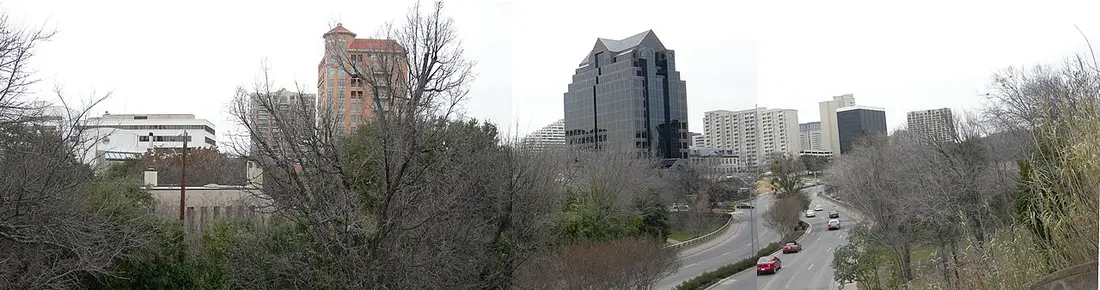
A small, established suburb of 1950s-70s homes - postwar systems at full age, kept with unusual civic pride.
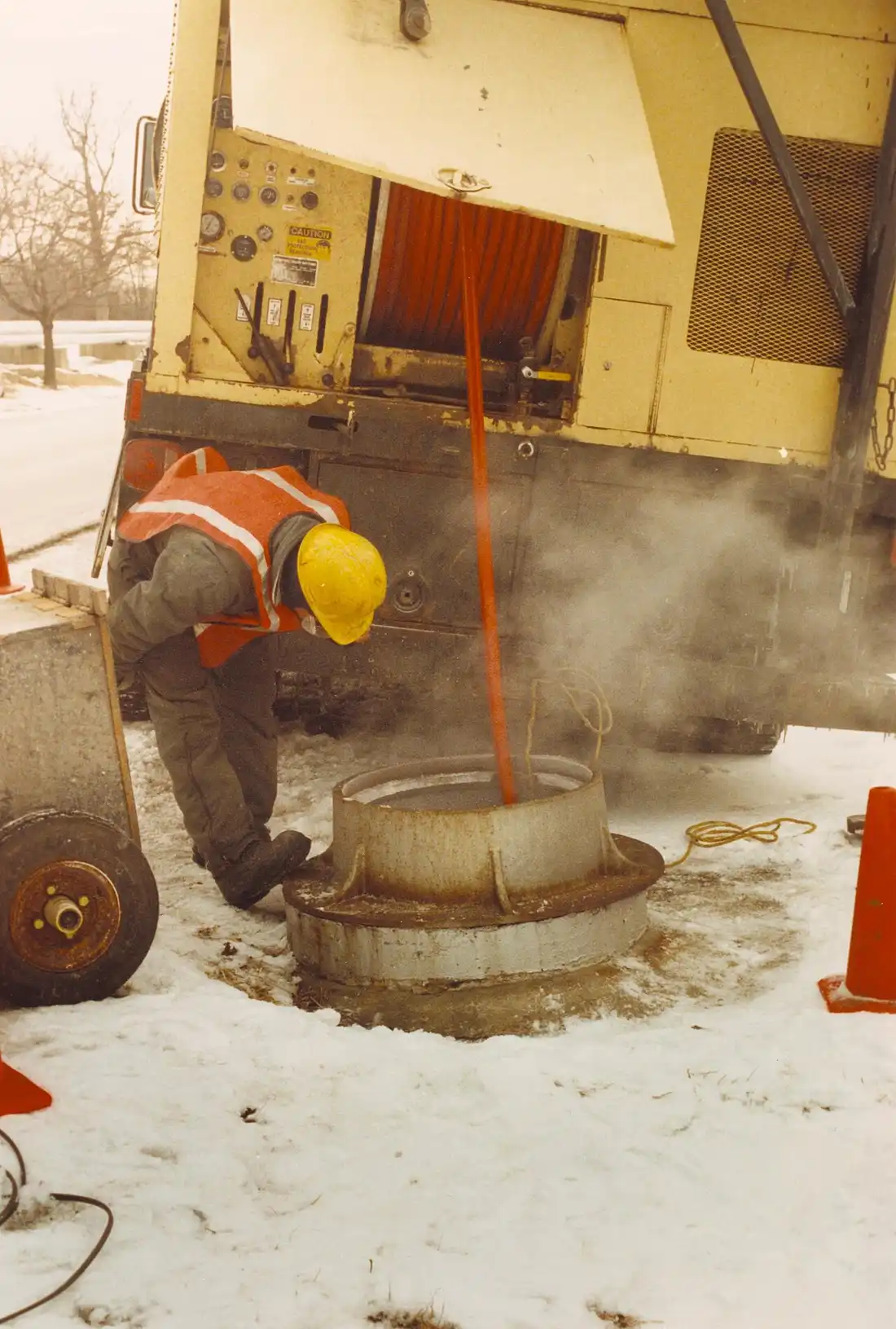
High-pressure water scouring that restores a drain's full diameter - the right tool for grease, scale and root-felted lines in Dallas.
The third constant is the sky's mood swings. North Texas summers push attic temperatures to extremes that age everything stored there - including the water heaters Texas builders insist on installing in them - while winters are mild until they are not: the February 2021 Winter Storm Uri froze and burst pipes across the metroplex, and every hard front since has replayed the lesson at smaller scale. Dallas plumbing is designed, repaired and winterized against that swing: pipes in exterior walls and crawl spaces are liabilities one week a decade, and certainties on a long enough calendar.
The fourth constant is the canopy. Dallas loves its trees - live oaks, pecans, hackberries, elms - and the trees love the moisture that seeps from sewer lateral joints. Root intrusion is the default diagnosis for a returning lateral clog in any neighborhood old enough to have both clay laterals and mature trees. Between the soil below, the water within, the sky above and the roots alongside, Dallas plumbing lives in a four-front negotiation - and the homes that fare best are the ones whose owners know all four fronts by name.
Kitchen lines that slow gradually, clear briefly after snaking, then slow again are plated with grease - the auger drills a tunnel, the tunnel closes. That pattern is jetting's home case.
When several fixtures on one line share a slowdown and the camera shows coated walls rather than a single blockage, the remedy is a wall cleaning, not a point clearing.
Roots that have felted into a mat catch solids faster than any cutting schedule can manage. Jetting shreds and flushes the mat out - and the after-footage shows the joint the roots came through.
Food service sends grease down the line daily; jetting on a maintenance schedule is how commercial kitchens avoid the backup that closes a dining room. The same logic serves any heavy-kitchen household.
Mineral scale and corrosion tubercles narrow cast iron from the wall inward. A jetter with the right nozzle strips the soft fraction and restores real diameter - after the camera confirms the pipe still has a wall to clean.
Sand, grit and remodel debris settle in low spots and seed clogs. Jetting's flushing action moves settled material out of the line in a way a cable never will.
Dallas kitchens produce the classic jetting case because of how the city was plumbed: long kitchen laterals, often with modest slope, running under slabs or through yards to the main. Fats and oils leave the sink liquid, cool in the line, and plate onto the walls - and a run that was marginal on slope becomes a grease trap with a pipe around it. Add the garbage disposal's fine grind (which plates beautifully) and the dishwasher's detergent load, and a decade of family cooking can halve a line's diameter without a single dramatic clog - just a slow fade that snaking never quite reverses.
The second Dallas case is biological: root mats in clay and older jointed lines. Roots enter at joints, then felt into dense masses in the nutrient flow. A cable cuts a channel; the mat remains, and refills the channel with caught solids in months. Jetting at proper pressure shreds the felt and flushes it downstream, restoring the joint's visibility for the camera - which then shows whether the joint is a maintenance item or a repair. In the oldest cast iron, the third case, scale: the jetter is used at moderated pressure with descaling nozzles, and only after footage confirms the pipe's remaining wall.
Jetting's limits are as local as its uses. A collapsed or badly offset line does not need cleaning - it needs repair, and jetting first just documents the failure expensively. Fragile pipe - Orangeburg-era material in a few pockets, or cast iron rotted paper-thin - can be damaged by pressure that healthy pipe shrugs off; that is why the professional sequence is camera, then jetting, then camera again. The after-footage is the deliverable: a line you can see is a line whose next maintenance date you can actually set.
Spring is Dallas plumbing's audit season. The winter's freeze stress - if the year had one - finishes announcing itself as the ground warms, and the spring rains saturate the clay, which swells and works on under-slab lines and laterals: slab leaks and slow laterals cluster in the wet weeks. It is the season to run the meter test, walk the yard for wet spots, camera any lateral that misbehaved in winter, and service the water heater before summer demand. Spring also opens the remodel calendar - the open-wall verdicts taken now are the least costly of the year.
Winter in Dallas is a mild season with a loaded tail: most weeks ask nothing, and then a front arrives that finds every uninsulated line in the city. The doctrine is forecast-based - when a hard freeze is predicted, the ritual runs: drip the far faucet, open the cabinet doors on exterior walls, keep the heat steady, know the shutoff. During the event, listen; at the thaw, walk the house and listen again, because Dallas pipes announce their splits when the ice lets go. A quiet winter is the ritual's reward.
Summer moves the stress indoors and up. Attics become ovens that age the water heaters sitting in them, irrigation systems run daily and hide yard leaks behind legitimate usage, and the clay - drying now - shrinks away from foundations and stresses the lines the wet spring swelled around. Slab leaks seeded by the moisture swing surface as bills spike alongside watering. Summer discipline: know your irrigation's normal consumption so a leak cannot hide inside it, keep the attic heater's pan drain clear, and treat a mid-summer bill anomaly as a leak until the meter test acquits it.
Jetting's real product is diameter. A drain line's capacity falls with the square of its narrowing - a line coated to half its bore carries roughly a quarter of its design flow, which is why coated lines clog at loads they once shrugged off. Restoring the wall restores the math. That is also why jetting's benefit outlasts snaking's by years on grease and scale cases: the snake restores a passage, the jetter restores the pipe. The maintenance intervals quoted after a jetting visit come from the after-footage - a clean wall and a known joint map - which is as close as drain work gets to a warranty on time.
There is an environmental footnote worth knowing: jetting cleans with water alone - no chemical openers entering the line, the soil or the treatment stream. For households and restaurants alike, the mechanical method is also the clean one. The debris flushed out is the line's own accumulated load, sent to the main it was always destined for. In an era of the trade defined by better information (cameras) and better physics (jets), jetting is what drain cleaning looks like when it grows up.
Choose jetting when the evidence says the walls are the problem - grease, scale, root mats - and insist on the camera bookends that prove the restoration. A jetted line with footage is a known asset; a snaked line is a hope with a date on it. For Dallas's older laterals and kitchen lines, that difference is the whole service.
Dallas plumbing starts with the ground itself. The city sits on the Blackland Prairie, whose expansive clay - the Houston Black soil series - swells when it takes on water and shrinks and cracks as it dries. That seasonal breathing moves everything buried in it or resting on it: slab foundations flex by fractions, under-slab water lines stress at the same points year after year, and sewer laterals open at their joints a hair at a time. A large share of Dallas plumbing work - slab leaks, lateral root intrusions, drains that lose their slope - is this single geological fact expressing itself through different pipes. Any diagnosis that ignores the soil is guessing.
The water itself is the second constant. Dallas drinks from reservoirs - Lake Ray Hubbard, Lewisville Lake, Grapevine Lake, Lake Tawakoni, Lake Fork and Lake Palestine among them - and the treated supply arrives moderately hard. Hardness is a maintenance schedule written into the water: it precipitates as scale inside water heaters, crusts aerators and showerheads, stiffens faucet cartridges, and demands yearly descaling from tankless units. It is not a safety issue; it is the reason Dallas plumbing maintenance has a rhythm that soft-water cities never learn.
The line is inspected before pressure is applied: material, condition, and the nature of the narrowing. Jetting a line that is actually broken wastes the visit and can worsen the break.
The jetter hose enters through the cleanout or a pulled access point, working from downstream toward the blockage so loosened material flushes out of the line, not deeper into it.
Grease, scale and roots each take different nozzles and pressures, and the pipe's material sets the ceiling. The operator works the hose back and forth through the narrowed run until the return water runs clean.
The after-run verifies the restoration: walls clean, diameter back, and the underlying line condition documented - joints, bellies or damage now visible and recorded for the maintenance plan.
Jetting restores a line; these habits defend the restoration. Most are about what the line is asked to carry - the least costly diameter protection is upstream of the drain entirely.
The communities around Dallas share its clay soil, its water and its freeze risk - with their own twists of housing era, slab construction and pier-and-beam stock.
A small, established suburb of 1950s-70s homes - postwar systems at full age, kept with unusual civic pride.
A small town of townhomes, condos and restaurant rows - shared systems and commercial loads in a few square miles.
1980s-2000s master-planned suburbia: big family homes whose first-generation systems are reaching decision age.
Lake city with a 1960s old town, 80s-90s subdivisions, and lake-side homes - three plumbing eras by neighborhood.
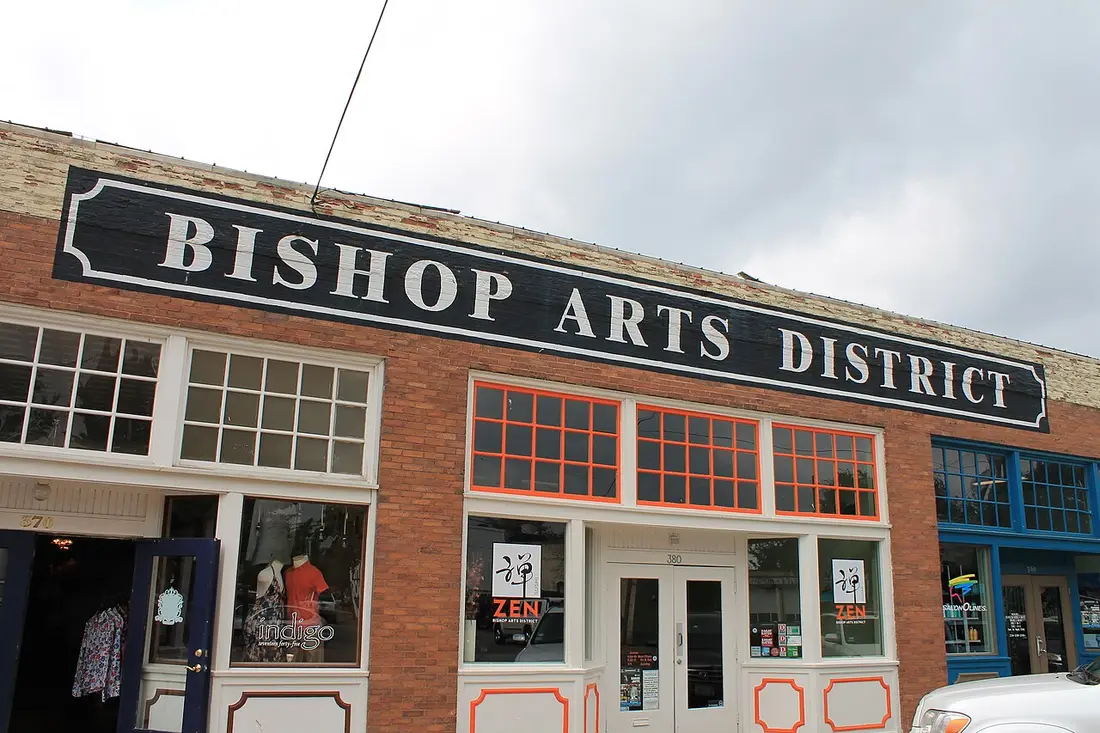
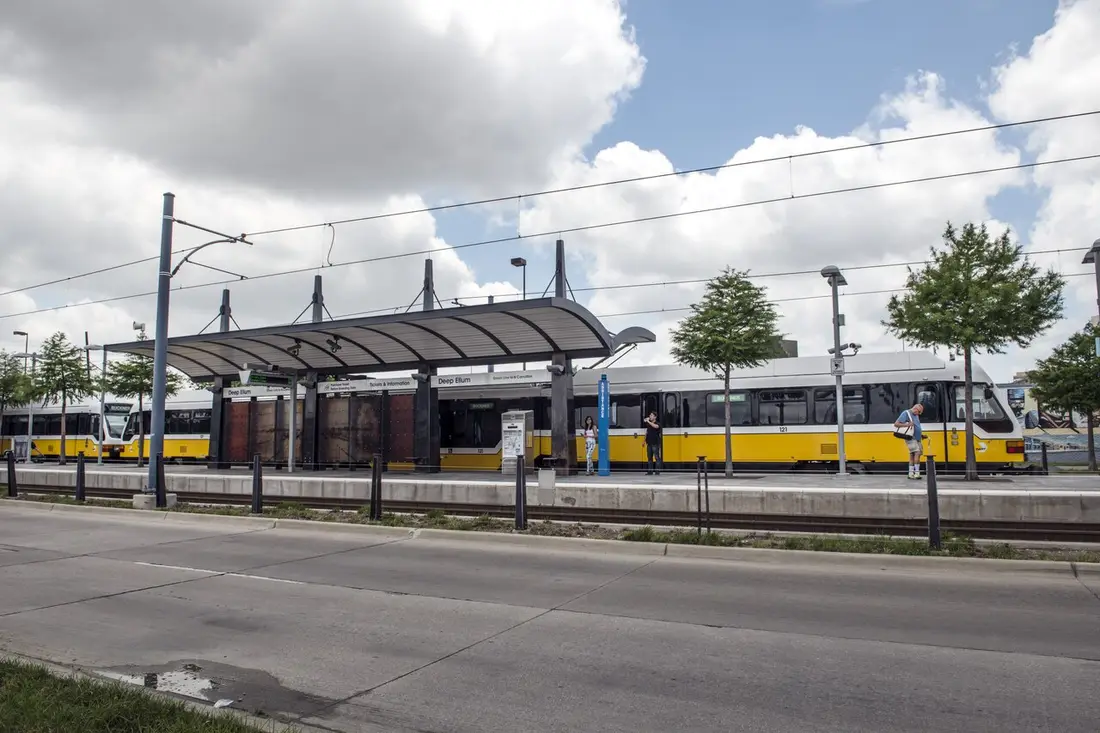
In the historic core, the Park Cities and the east side - Downtown Dallas, Uptown, Highland Park, University Park, Lakewood and Oak Lawn, Bishop Arts, Deep Ellum, North Dallas, East Dallas - the pipe stock runs from Dallas's oldest cast iron and clay to the boom-decade copper of the postwar subdivisions, and hydro jetting follows that record: century-old systems in the core, mid-life stock in the subdivisions, and shifting clay working on all of it at the same rate.
Across the north and west growth sides - Oak Cliff, South Dallas, Richardson, Garland, Mesquite, Irving and Grand Prairie, Plano, Frisco, McKinney, Allen, Carrollton - sit the slab subdivisions of the 1970s onward, the growth-edge suburbs and the second-generation systems now reaching their first renewals, which together make this the steadiest hydro jetting territory in the metro.
Beyond the city line, the same work runs in Farmers Branch, Addison, Coppell, Lewisville, Rowlett, Rockwall, DeSoto, Duncanville, Cedar Hill, Lancaster, Balch Springs - fast-growing suburbs and older inner-ring communities where slab stock, mature trees and small-city pipe add their own chapters. Every one of these area pages carries the local detail for hydro jetting in that community.
Every area we serve has its own Hydro Jetting page with local detail.
Hydro Jetting runs across the whole service map: Downtown Dallas, Uptown and Deep Ellum; Highland Park, University Park and Oak Lawn; Lakewood, East Dallas and Bishop Arts; North Dallas, Oak Cliff and South Dallas; and beyond the city in Richardson, Garland, Mesquite, Irving, Grand Prairie, Plano, Frisco, McKinney, Allen, Carrollton, Farmers Branch, Addison, Coppell, Lewisville, Rowlett, Rockwall, DeSoto, Duncanville, Cedar Hill, Lancaster and Balch Springs. One call covers all of it - the local pages above carry the detail for each. If your street is not named here, call anyway: routes grow with demand, and most Dallas County addresses are already within reach of a scheduled run.
Read slow drains by census: one fixture slow is local (trap, popup, hair), one bathroom slow is a branch, the whole house slow - or the lowest drain backing up - is the main or the lateral. Dallas's materials write the patterns: cast iron scales shut from inside, clay laterals take roots at their joints, kitchen lines plate with grease, and hard water crusts the fixtures themselves.
Read the GuideDecide by the vessel, not the part: a failed element or valve on a young tank is a repair; the same failure on a ten-plus-year tank with rust or rumble is money lent to a vessel that is leaving. In Dallas water, tank life runs eight to twelve years, with yearly flushing and anode care earning the long end. An attic location raises the stakes - a neglected attic tank is a ceiling claim waiting for its date.
Read the GuideOlder Dallas sewer laterals are clay tile (jointed every few feet) with cast-iron house drains - and both materials are at or past their design lives in the prewar and postwar neighborhoods. The failure team is consistent: clay-soil movement opens joints, tree roots enter them, cast iron scales and rots from inside. Recurring clogs are the symptom; the camera is the diagnosis.
Read the GuideIt shreds and flushes the root mass inside the line and exposes the joint the roots entered. It does not seal the joint - roots return through it on their growing schedule, which is why root lines pair jetting with either a cleaning calendar or a joint repair conversation.
Clay itself is hard and tolerates jetting; the joints are the variable. The camera checks joint condition first, pressure is matched, and the after-run verifies nothing shifted. For sound clay laterals, jetting is the standard root and buildup remedy.
Access through your cleanout, a camera run, the jetting itself (audible, with water flowing to the main), and a verification camera run. Driveway or street parking for the machine, and water use at the property during the work.
The equipment, the water volume, the camera work on both ends, and the result: a restored line rather than a punctured blockage. Priced against the repeat-snaking cycle it replaces, a jetted line on a maintenance calendar is usually the cheaper ownership pattern.
A snake or auger rotates a cable that bores through the blockage and retrieves or breaks it - the walls stay coated. Jetting scours the walls themselves with high-pressure water, restoring the pipe's diameter and flushing the debris out. For a single hard blockage, a cable may be right; for narrowed, coated or matted lines, jetting is the actual cleaning.
It can damage pipe that is already failing - which is why the camera runs first. Sound PVC, clay and cast iron tolerate jetting at matched pressure well; paper-thin rotted iron does not, and the footage reveals that before pressure is applied. The inspection is what makes the service safe for older Dallas lines.
On the line's evidence, not a calendar: a root-history clay lateral may be jetted yearly in the growing season; a grease-prone kitchen line every year or two; a sound modern line, perhaps never. The after-jetting footage sets the interval by showing how the line actually loads.
Usually, yes - the penetrating jet opens a path and the flushing jets clear the mass. The exceptions are structural: a collapsed line, a badly offset joint, or an object that does not belong in a pipe. Those are camera diagnoses, and jetting becomes the cleaning after the repair.
One call connects you with a plumbing professional serving Dallas and the surrounding communities - diagnosis, repair and a clear scope before work starts.
📞 Call Now